Underdeveloped agriculture
Farming is the main livelihood, yet only a third of land is cultivated and just 40% of that is irrigated.
Welcome to SOEA
Odisha is rich in natural wealth, yet its southern districts face some of India's deepest poverty. SOEA brings economists, researchers, policymakers and development practitioners together to turn evidence into real change.
Research. Dialogue. Innovation.
District boundaries: Census of India 2011, via DataMeet.
Key numbers

Rich in resources. Short on opportunity.
That's the gap SOEA exists to close.
About us
Hover or tap a district to see its name.
The region
districts rank low on national and state poverty indices. Only Ganjam is the exception.
Large Scheduled Caste and Scheduled Tribe population; high labour participation alongside economic distress.
The challenges
Farming is the main livelihood, yet only a third of land is cultivated and just 40% of that is irrigated.
38% of the state's forests offer huge bio-economy potential, but modern industry remains limited.
People work hard, yet a lack of local opportunity forces many to leave home in search of jobs.
Gaps in public health and education hold back human development across the region.
Our story
Working for inclusive, sustainable and equitable growth for every person in South Odisha.
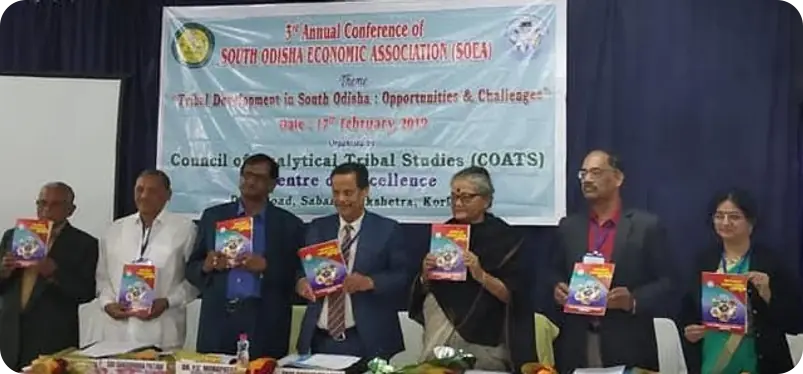
Through rigorous research and regular policy dialogue, SOEA studies the region's barriers to growth and develops practical, evidence-based strategies to improve governance.
One platform for
Executive members
Prof. (Dr) Nirmal Chandra Sahu is an economist with 33 years of teaching and research, widely recognised for his work in ecological and environmental economics. A postgraduate gold medallist, he earned his Ph.D. in Economics from Berhampur University and pursued post-doctoral study at the University of York, UK, under a World Bank Project Fellowship. His influential paper “Niche diversification in environmental/ecological economics,” co-authored with Bibhudatta Nayak in Ecological Economics (Elsevier, 1994), compares neoclassical environmental economics with ecological economics and is widely cited. He co-edited Dimensions of Environmental and Ecological Economics (2005). In all, he has written three books and nearly a hundred research papers, and has supervised one D.Litt., 14 Ph.D. and 45 M.Phil. scholars. He is a founder member of the Indian Society for Ecological Economics, served as Honorary Consultant to the SANDEE project (IUCN Nepal), and is a life member of the Indian Economic Association and several professional bodies.
Prof. (Dr.) Bhagabata Patro is an economist whose career spans government, banking and academia. He earned his M.Phil. and Ph.D. in Economics from Berhampur University. He began as a Lecturer in Economics and then served as Assistant Manager (Economic Investigation and Marketing) at the District Industries Centre, Government of Odisha. He joined Berhampur University as Lecturer in Economics (Econometrics) and, while on lien, worked as Junior Economist at UCO Bank’s Guwahati Divisional Office. He returned as Reader and retired as Professor and Head of the Department. Over 37 years of teaching, he has guided 11 Ph.D. and over 45 M.Phil. scholars, written 12 books and 21 book chapters, and published 35 journal articles. He has led several sponsored research projects as Principal Investigator and attended over 100 conferences and seminars. He advises Youth for Social Development (YSD India) and is a member of the Odisha Commerce Association and several professional bodies.
Prof. (Dr.) Chandra Dhwaj Panda is one of the founders of the Gandhi Group of Institutions, a leading network for technical and professional education in eastern India. Trained as an economist, he holds an M.A., M.Phil. and Ph.D. in Economics and an MBA. He is a Founder Member and Trustee of the Vidya Bharati Educational Trust, Gunupur, set up by South Odisha educationists in 1996, which founded the Gandhi Institute of Engineering and Technology (GIET) in 1997. He currently serves as Vice President of GIET University, Vice-President on its Board of Governors and a member of its Board of Management. As Secretary of GITA, Bhubaneswar, he has championed research and faculty development and is widely credited with the institute’s growth. He has been a director of the ACIC GIET University Foundation since June 2020. A motivating teacher and approachable leader, he blends traditional values with modern ideas in serving the underprivileged.
Prof. (Dr.) Mrutyunjaya Mishra is an economist with nearly four decades of teaching and research in environmental and ecological economics, energy economics and natural resource management. He is Senior Professor in the Department of Economics, Banaras Hindu University, where he has served as Head of Department, Coordinator of the Centre for the Study of Nepal, and Coordinator of the Energy Economics course under the BRICS Network University. He earned his M.Phil. and Ph.D. from Berhampur University, did postdoctoral research at the University of York, UK, under a World Bank–supported fellowship, and later held a Health Effects Institute fellowship in Boston. He is also a Fulbright-Nehru Environmental Leadership Fellow. He has completed four major research projects, published 36 indexed papers and 18 book chapters, presented his work in ten countries, and guided 12 Ph.D. scholars. He is a life member of several economic associations, including the Indian Economic Association and SOEA.
Dr. Nilachala Acharya is a public finance specialist with over 25 years of policy research on Public Financial Management (PFM). He is Senior Specialist – Public Finance Management at IPE Global Ltd., New Delhi, and has been a Senior Consultant to the Sixteenth Finance Commission, Government of India, and to the World Bank. For seven years he was Research Director at the Centre for Budget and Governance Accountability (CBGA), New Delhi, working on PFM reforms, fiscal policy for the social sectors, agriculture and nutrition, and fiscal transparency across India and South Asia. He began his career at the Centre for Policy Research and Advocacy, CYSD, Bhubaneswar, studying Odisha’s state spending and public debt and producing budget handbooks for civil society. He writes widely on public finance. He holds a Ph.D. in Economics from the Centre for Economic Studies and Planning, Jawaharlal Nehru University, and is a Research Professor at GIET University, Gunupur.
Prof. (Dr.) Sandhyarani Das is Research Professor at GIET University, Gunupur. She joined after retiring in 2021 from the Department of Economics, Berhampur University, where she taught and researched for nearly three decades. She has written four books, more than 40 research papers in national and international journals, and 25 chapters in edited volumes on economics, commerce and management. Twelve scholars have completed their Ph.D. and 29 their M.Phil. under her guidance, and she currently supervises five more Ph.D. candidates. She has taken part in 15 international and over 100 national conferences, and served as Joint Secretary of the Indian Economic Association. She is a life member of several bodies, including the Indian Society for Ecological Economics and the Odisha Economic Association, and has made academic visits to Nepal, Canada and Sri Lanka. Beyond academia, she helps rural women form self-help groups and organises health camps in remote villages.
Dr. Purushottam Sahu is an economist and educator with 34 years of college teaching in Odisha. He earned his Ph.D. in Economics from Berhampur University and joined Gopalpur College as Lecturer in Economics in 1990. He later served at Sri Bharat Pati Mahavidyalaya, Samantiapalli, and Ganjam College before returning to Gopalpur College, from where he retired in April 2024. He has published more than 40 research articles, completed two UGC Minor Research Projects and guided one Ph.D. scholar. As NSS Programme Officer, he received the Best Programme Officer award from Berhampur University and the Best NSS Unit State Award (2012–13) from the Government of Odisha. The Odisha Department of Forest and Environment honoured him with the Prakruti Bandhu Award for environmental conservation. He advises the Ganjam Kewda Development Trust and is a life member of the Indian Economic Association, INSEE, ISAE, ISLE, the Odisha Economic Association and the Odisha Commerce Association.
Mr. Bibhu Prasad Sahu is a development practitioner and researcher with nearly two decades of experience in governance, social accountability and citizen participation in Odisha. He holds an M.Phil. in Economics. In 2006 he founded Youth for Social Development (YSD), a Berhampur-based non-profit that works with communities, local governments and public agencies across southern Odisha on transparent governance, child rights, youth development, education and climate justice. He is recognised for his expertise in social accountability tools. In 2011 he served as a consultant to the World Bank Institute’s virtual learning programme on social accountability, and in 2013 the World Bank’s Global Partnership for Social Accountability recognised him as a roster expert. In 2019 he became the first civil society leader from Odisha selected for the US State Department’s International Visitor Leadership Program, under its “Transparency and Accountability in Government” theme. As Joint Secretary, he brings a grassroots practitioner’s perspective to SOEA’s work.
Prof. (Dr) Umesh Chandra Panigrahi is an economist and management educator with more than 30 years of experience in teaching, research and academic leadership. From 2011 to 2026 he was Professor and Head of the MBA Department at Kalam Institute of Technology (KIT), Berhampur. Before that, he spent two decades as Senior Lecturer in Economics at Gopalpur College, Gopalpur-on-Sea (1991–2011). He holds an M.A. in Economics, an MBA, an M.Phil. in Futurology and a Ph.D. in Economics. He co-authored Indian Economy (Volumes I and II), a textbook published in both English and Odia and prescribed for undergraduate courses across Odisha. He has also edited six books, published widely in academic journals and guided two Ph.D. scholars. An experienced organiser, he has convened eight national and four international conferences and four workshops. His research interests span development economics, housing economics, banking and finance, gender issues, corporate governance and leadership.
Vision & mission
"A prosperous, inclusive and self-reliant South Odisha, where every community, especially Scheduled Tribes, Scheduled Castes and rural households, shares fairly in the region's growth, and where its natural wealth becomes the foundation of quality human development."
Our mission
Credible, region-specific evidence on poverty, health, education and more
Turning research into practical advice for better governance
Conferences and seminars where all voices meet and share
Stronger farming, a responsible bio-economy, dignified local jobs
Better access to education, health care and essential services
Mentoring young scholars and raising local voices in policy
Activities
Region-specific studies on poverty, livelihoods, agriculture, migration, health and education.
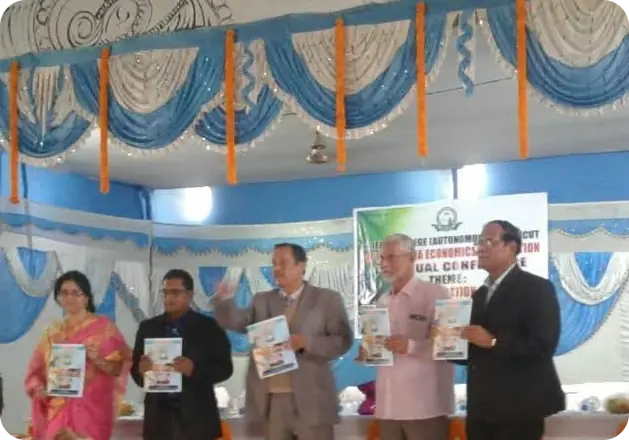
Policy dialogues that bring academics, officials, civil society and communities to one table.
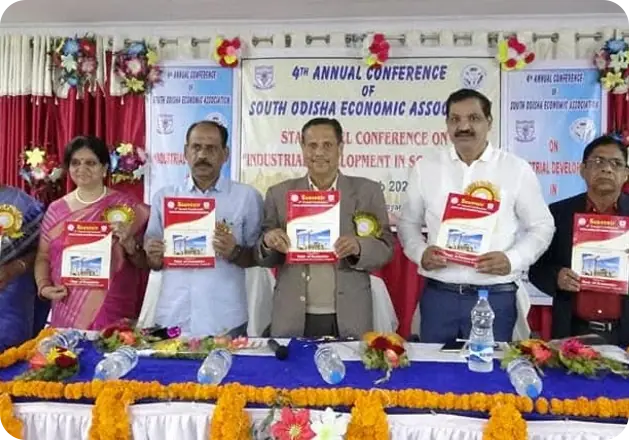
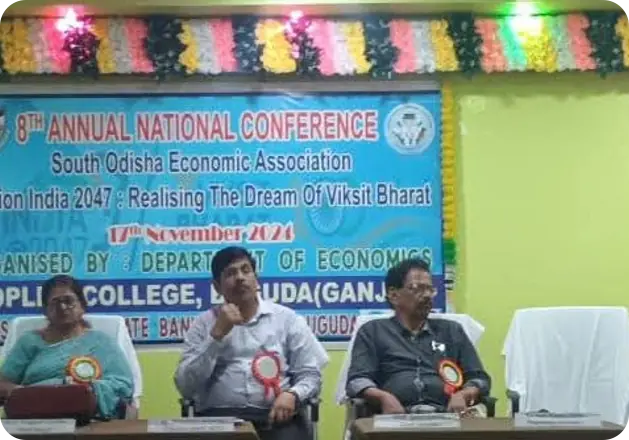
Flagship gatherings where new research is shared, debated and celebrated.
Gallery
Get involved
Join a network of economists and researchers working for the region.
Institutions and agencies: co-host dialogues or back research.
Present your work at our seminars and annual events.
SOEA will reply to the email address you gave.
Preview note: this form is not connected to a mail service yet, so nothing has been sent. To reach SOEA now, write to info.soea2016@gmail.com.